
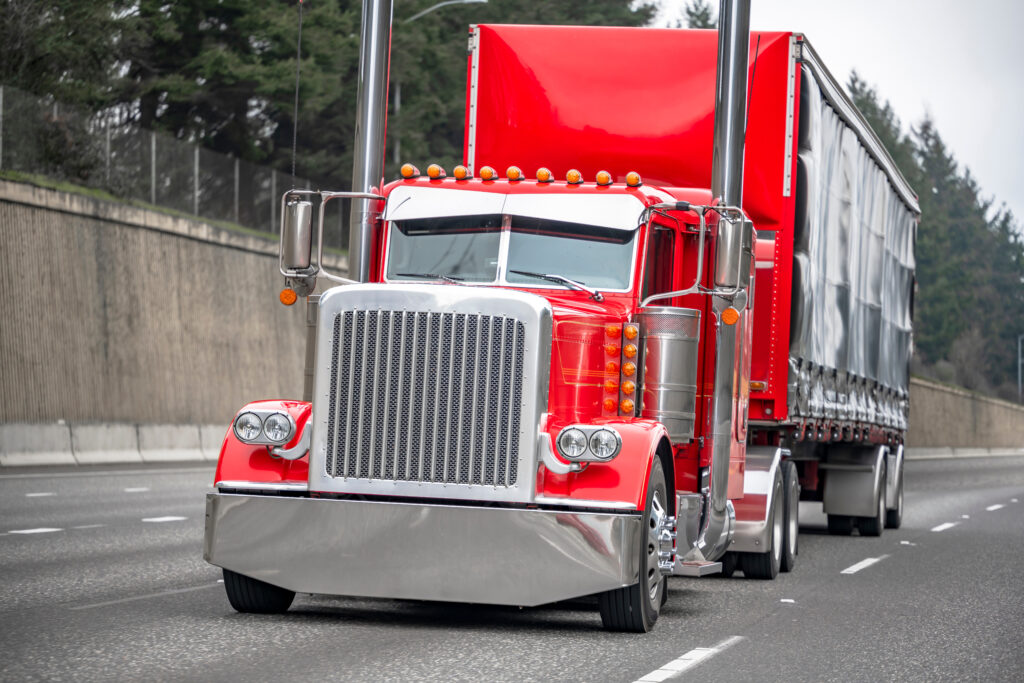
A fully loaded big rig cannot swing through a right turn the way a sedan does. To clear the corner without dragging its rear wheels over the curb, the driver often has to angle the truck left first, then sweep back right across lanes the car behind it assumed were empty. That single maneuver, repeated at intersections across California every day, is responsible for some of the most devastating collisions on our roads.
At Setareh Law, we have spent more than 60 years combined handling cases where a commercial truck’s wide turn caused serious harm to a driver, cyclist, or pedestrian who never saw it coming. We know how these crashes happen, who tends to be responsible, and what it takes to hold trucking companies accountable when their equipment or their drivers fall short of what the road demands.
Why Wide Turns Are So Dangerous
A standard tractor-trailer can measure over 70 feet long, and its trailer does not follow the exact path of the cab. Engineers call this off-tracking, and it means the rear wheels cut a tighter arc than the front of the truck. On a right turn, a truck may need to swing wide to the left before angling back, temporarily blocking or entering the lane next to it.
Drivers, cyclists, and pedestrians near the truck during this maneuver often have only seconds to react. A car waiting beside the truck may assume it is turning left, not realizing the trailer is about to cut back across its path. Cyclists and pedestrians at the corner face an even greater risk, since a truck’s turning radius can extend well beyond what most drivers expect, according to Federal Motor Carrier Safety Administration data on commercial vehicle turning behavior.
Who May Be Held Responsible
Wide-turn crashes rarely come down to one clear cause, and liability can extend well past the person behind the wheel. Identifying every responsible party matters because it may open up additional avenues for recovering compensation.
Some of the parties who may share fault in a wide-turn collision include the following:
- Truck Driver: A driver may fail to signal early, check mirrors, or clear the intersection before beginning the turn
- Trucking Company: A carrier that pressures drivers to rush routes or skips proper training on turning maneuvers may share responsibility for the crash
- Cargo Loader: Uneven or overloaded cargo can shift a trailer’s weight and affect how it handles a turn
- Vehicle Manufacturer: A defect in steering, mirrors, or turn signals may contribute to a driver’s inability to safely complete the turn
- Government Entity: Poor intersection design or missing signage at a known wide-turn hazard may point to a public entity’s role in the crash
Once we identify who contributed to the crash, we can build a case that reflects the full scope of what happened rather than settling for a partial picture.
Proving Fault After a Wide-Turn Collision
Wide-turn cases often hinge on details that disappear quickly after a crash. Skid marks fade, traffic signals cycle again, and a truck may already be back on the road before anyone documents its position at the moment of impact.
Evidence That Supports a Claim
Dashcam footage, intersection cameras, and eyewitness statements can all help recreate the exact angle and speed of the truck during its turn. Many commercial trucks also carry electronic logging devices and onboard cameras that record speed, braking, and steering input in the seconds before a crash, which can clarify whether the driver took reasonable precautions.
Working With Investigators
Our attorneys often bring in accident reconstruction specialists who can measure the intersection, calculate the truck’s likely turning arc, and compare it against the physical evidence left behind. This kind of analysis can reveal whether the driver had room to complete the turn safely or whether the geometry of the intersection made a wide turn unavoidably dangerous for anyone nearby.
What to Do After a Wide-Turn Truck Accident
The moments after a crash with a commercial truck can feel overwhelming, especially when injuries make it hard to think clearly about next steps. Getting medical care should always come first, since some injuries from being struck by or pinned near a turning trailer are not immediately obvious.
Once immediate safety needs are addressed, documenting the scene while details are fresh can strengthen a future claim. Photos of the intersection, the truck’s position, and any visible skid marks may later help establish exactly how the turn went wrong. We can also help gather records from the trucking company before they are lost, including driver logs and maintenance history that may reveal patterns of negligence.
Contact Setareh Law After a Wide-Turn Truck Accident
A wide turn takes only seconds, but the injuries it causes can affect someone for years. Understanding how off-tracking works, who may be responsible, and what evidence supports a claim can help make sense of a confusing and frightening situation.
Our team has recovered over $250 million for clients across California, and we work on a contingency fee basis, so there is no cost unless we recover compensation. We offer 24/7 availability, home visits, and bilingual services in English and Spanish, and we are ready to review the details of a wide-turn collision and explain the options available. Reach out through our contact form to discuss what happened and how we may be able to help.