Setareh Law
June 3, 2026
Speed is one of the leading contributors to serious traffic injuries and fatalities in California — and the state has now moved to address it in a way it never has before. As automated speed cameras roll out across six major California cities under Assembly Bill 645, a new layer of evidence is entering the picture for drivers, pedestrians, and injury victims alike. Understanding what these cameras capture, where they operate, and how that data can affect a personal injury claim is increasingly relevant for anyone on California roads.
At Setareh Law, our attorneys stay current on the evolving legal landscape affecting auto accident claims in California. With over 60 years of combined experience and more than $250 million recovered for injured Californians, we understand how shifts in the law translate to real differences in how cases are built and won.
What AB 645 Actually Does
AB 645, signed into law in 2023 and now actively rolling out in 2025 and 2026, authorizes a five-year automated speed enforcement pilot program in six cities: Los Angeles, San Francisco, San Jose, Oakland, Glendale, and Long Beach. San Francisco was the first city to reach full enforcement, issuing citations as of August 2025. Oakland and San Jose activated their systems in late 2025 and early 2026, respectively. Los Angeles is currently deploying up to 125 cameras, with enforcement expected to begin mid-2026.
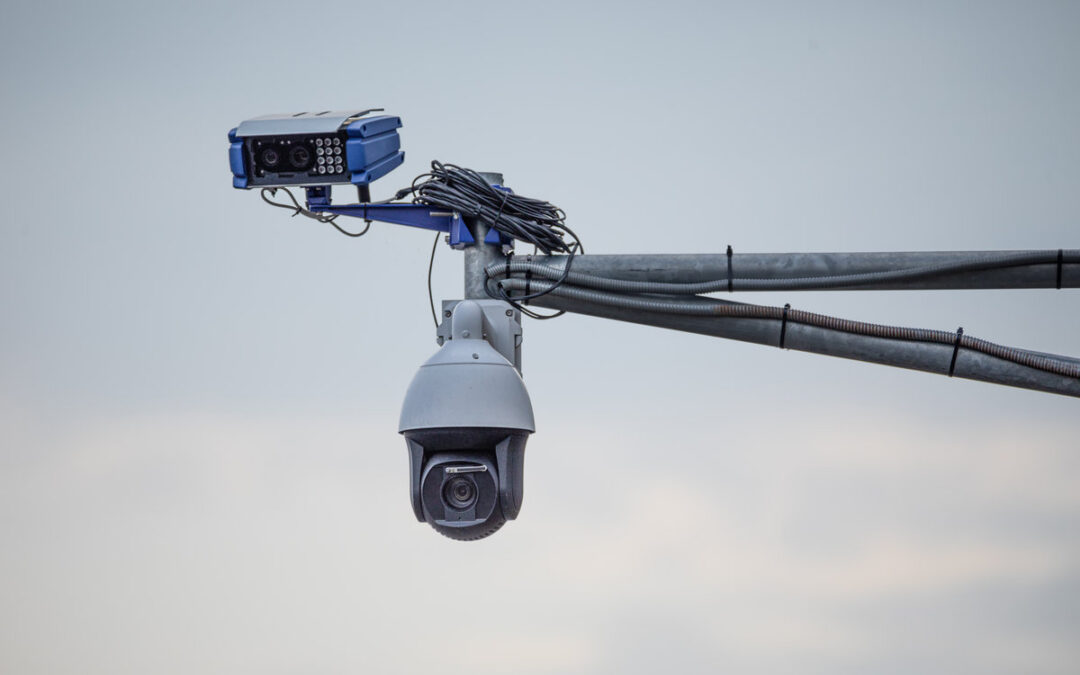
Cameras under AB 645 are restricted to three categories of high-risk locations: school zones with reduced speed limits, high-injury network corridors with documented patterns of severe or fatal collisions, and street-racing corridors. The law requires a 60-day warning period at each new camera location before citations begin, and fines are structured on an income-based sliding scale. Importantly, violations are civil penalties and do not add points to a driver’s DMV record.
How Camera Data Could Affect Personal Injury Claims
The implications for civil litigation go well beyond the citations themselves. UC Berkeley’s SafeTREC research brief on California’s speed camera rollout, published in September 2025, analyzes AB 645’s alignment with national best practices and notes the program’s data-driven site selection — cameras are placed specifically where speeding has already contributed to serious injury and death.
When a speed camera is located near a crash scene, the footage and violation records from that system become potentially critical evidence. Why speed matters in car accidents has always been a central issue in personal injury claims — excessive speed increases both the likelihood and severity of a crash. Camera data documenting a driver’s speed at or near the time and location of a collision provides a form of objective, calibrated evidence considerably stronger than eyewitness accounts alone.
What the Law Says About Camera Data and Privacy
AB 645 contains specific language governing how camera data can be used. Photographic and administrative records from speed safety systems are designated as confidential, and their use is strictly limited to speed enforcement purposes. This means the footage itself is not publicly accessible and cannot simply be pulled into a civil case through ordinary discovery.
However, the existence of a speed camera citation issued shortly before or at the time of a collision remains relevant to a personal injury claim, as citation records may be obtainable through proper legal process. How fault is determined in a California car accident involves assessing all available evidence of the at-fault driver’s conduct, and a citation for traveling 10 or more miles per hour over the speed limit near the crash site is exactly the kind of contemporaneous evidence an attorney will pursue.
Practical Steps for Injured Parties in Camera-Equipped Zones
For anyone injured in an accident near one of these camera locations, preserving access to all available evidence from the outset is essential. The following steps matter immediately after a crash in a speed-camera zone:
- Document the crash location precisely: photograph street signs, lane markings, and any nearby infrastructure, including posted camera warning signs required by AB 645
- Request the police report promptly: officers responding to crashes in camera zones may note the presence of enforcement equipment or any citation activity in the area
- Contact an attorney before engaging insurers: speed camera data has privacy restrictions, but an attorney can determine what is lawfully obtainable and through what channels
- Preserve your own records: medical documentation, witness contact information, and dashcam footage from your own vehicle all support a claim independently of camera data
Preserving evidence after an accident has always been important — in speed-camera zones, the timeline is even more compressed because digital records can be overwritten or purged on short cycles.
How This Changes the Value of Speed-Related Claims
Speeding cases have historically required reconstructing vehicle speed from physical evidence — skid marks, impact damage, and witness accounts. Speed camera citations issued near the time of a crash provide a level of precision those methods cannot match. For an injured person pursuing pain and suffering damages in a personal injury case, documented evidence of excessive speed directly supports arguments about the recklessness of the at-fault driver’s conduct. This is also relevant in the context of California’s evolving pedestrian safety laws, where speed is a central factor in pedestrian crash outcomes.
Contact Setareh Law After a Speeding-Related Accident
California’s speed camera program is still in its early stages, and the legal implications for personal injury claims are still being defined. The attorneys at Setareh Law monitor these developments and apply them directly to client cases. Every case is handled on a contingency fee basis — no upfront cost and no fee unless we recover. With eight office locations across California, home visits available, and over 400 five-star Google reviews, we are prepared to act quickly when evidence windows are narrow.
If you were injured in a crash involving a speeding driver in one of California’s pilot cities, time matters. Contact Setareh Law today for a free consultation with our team.

