Legally Reviewed by Daniel Setareh on October 21, 2026
A car accident in California can turn an ordinary drive into months of medical appointments, missed paychecks, and phone calls from insurance adjusters you never asked to hear from. Drivers across the state rely on long, heavily traveled routes such as I-5, US-101, I-10, I-405, and SR-99, and a single crash on any of them can leave drivers and passengers with injuries that change daily life. The California Office of Traffic Safety reports 4,061 traffic fatalities statewide in 2023, a reminder of how serious these collisions can be. You should not have to work out your rights while you are still trying to heal.
With 60 years of combined experience, more than 900 five-star reviews, and seven California offices, Setareh Law, APLC Personal Injury & Accident Lawyers has helped injured individuals through every stage of the claims process. Our personal injury lawyers in California take car accident cases on a contingency fee basis, so you pay a fee only if we get results. Home and hospital visits are available, and se habla español.
⚠ Time-Sensitive Notice for California Drivers
Most California car accident lawsuits must be filed within 2 years, and claims against a public entity can have a deadline as short as 6 months.
60 years of combined experience, more than 900 five-star reviews, and no fee unless we get results. Home and hospital visits are available.
How a California Car Accident Claim Works
A California car accident claim is a request for payment from the at-fault driver’s insurance company, and when the insurer does not offer a fair amount, the next step is a lawsuit in California Superior Court. Most claims move through the same four stages, and knowing them helps you avoid steps that are hard to undo.
1. Investigation
The crash report, photographs, video, vehicle data, and witness statements are gathered to show how the collision happened and who was responsible.
2. Medical Proof
Treatment records and bills connect each injury to the crash and show what future care may cost, so the claim reflects the full picture.
3. Demand and Negotiation
A written demand sets out the losses and the amount sought, and the insurer responds with an offer, a denial, or a request for more information.
4. Lawsuit if Needed
When talks stall or the offer is too low, a complaint can be filed in California Superior Court before the filing deadline runs out.
The California Highway Patrol or the local police department usually responds to a crash, and the report an officer writes often becomes the first piece of evidence both sides review. That report is useful, but it is not the final word on fault.
Statute of Limitations for California Car Accident Cases
Most California car accident injury lawsuits must be filed within 2 years of the date of the crash, and missing the deadline usually ends your right to recover compensation. Other deadlines can be shorter or longer depending on who is responsible and what was damaged.
| Type of Claim | Deadline | What to Know |
|---|---|---|
| Personal injury | 2 years | Runs from the date of the injury. This also applies to wrongful death claims, counted from the date of death. |
| Property damage | 3 years | Covers damage to personal property such as your vehicle and belongings, which has a longer window than an injury claim. |
| Claim against a public entity | 6 months | A written claim must be presented to the city, county, or state agency first. This can apply to a crash involving a government vehicle or a dangerous road condition. |
| Injured minors | May be extended | The clock can be paused while the injured person is under 18, but government claims still follow their own rules. |
Exceptions and tolling rules depend on the facts, and the safest approach is to speak with a lawyer as soon as you can after a crash. Evidence fades, video gets overwritten, and witnesses move on long before a deadline arrives.
Common Types of Car Accidents in California
No two collisions are identical, but most injury claims fall into a handful of patterns, and each one raises its own questions about fault and insurance.
Rear-End Collisions
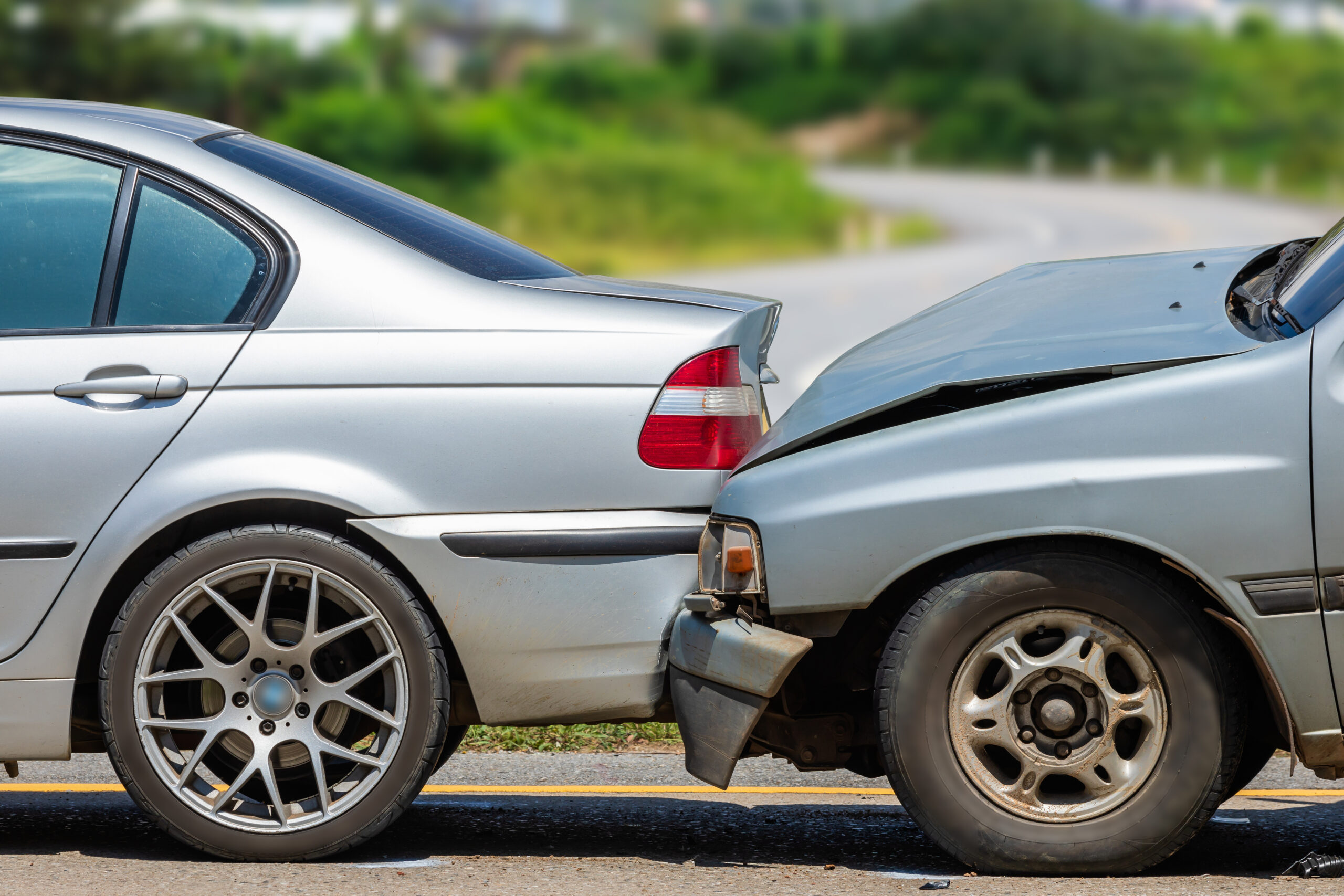
A driver who is distracted, following too closely, or slow to brake can strike the car ahead. These crashes often cause neck and back injuries, including whiplash, even at moderate speeds.
Intersection and T-Bone Crashes
Red-light running, failure to yield, and unsafe left turns lead to side-impact crashes, where occupants have little protection. A malfunctioning traffic signal can also affect who is responsible.
Head-On Collisions
Wrong-way driving, crossing a center line, drowsy driving, and impaired driving can cause head-on impacts on two-lane highways and freeways alike. The combined force of two vehicles makes these among the most likely crashes to cause severe injuries.
Hit-and-Run Crashes
California law requires a driver in a crash that injures someone to stop and remain at the scene. When a driver flees, your own coverage may still help, and hit-and-run legal options depend on the evidence available.
Rideshare Accidents
A crash involving a rideshare driver can involve several insurance policies, and which one applies often depends on whether the app was on and whether a passenger was in the car.
Uninsured Driver Crashes
When the at-fault driver has no insurance or too little, your own policy may be the first place to look for payment, depending on how it is written.
Many other crashes, including sideswipes, lane-change collisions, parking lot impacts, and multi-vehicle freeway pileups, follow the same basic process. Whatever the type, the first step is to understand who may be responsible and what coverage is available.
Who May Be Responsible for a California Car Accident
More than one person or business can share responsibility for a single crash, and identifying every one of them can raise the amount of insurance available to pay your claim.
- The driver who caused the crash, whose liability insurance is usually the first source of payment.
- The registered owner of the vehicle, who can share responsibility for a permitted driver under California’s owner liability law, up to the limits the statute sets.
- An employer, when the driver was working or running an errand for the business, which is explained in this overview of company vehicle liability.
- A city, county, or state agency, when a poorly maintained road, missing signage, or a broken signal contributed to the crash.
- A vehicle or parts maker, when a defect in the brakes, tires, steering, or another part played a role.
Each of these parties usually has its own insurer and its own lawyers, which is one reason a claim can become complicated quickly.
California Comparative Fault and Your Claim
California follows a pure comparative fault system, which means you can still recover compensation if you were partly to blame, although the amount is reduced by your share of fault. A jury that finds you 20 percent responsible, for example, reduces your damages by 20 percent, and you can still recover the rest.
Under Civil Code section 1431.2, each defendant is responsible for non-economic damages only in proportion to their own share of fault. Insurers know how much this matters and often try to push a larger share of blame onto you, so it helps to understand how the pure comparative negligence rule can affect a car accident case.
How Fault Is Decided After a California Car Accident
No single document decides fault. Adjusters, and later a judge or jury, weigh several sources of proof against each other, which is why how fault is determined in a California crash depends so heavily on what was preserved early.
The Police Report
Officers record the scene, driver statements, any citations, and sometimes their opinion about the cause. A report is useful evidence, but it can contain errors.
Physical Evidence
Vehicle damage, skid marks, debris fields, traffic signals, and road design can show speed, direction, and the point of impact.
Witnesses and Video
Independent witnesses, dash cameras, doorbell cameras, and nearby business footage can settle disputes over who had the right of way.
Traffic Laws and Records
Broken traffic rules, phone records, vehicle data recorders, and maintenance records can show what a driver did in the moments before the crash.
California Traffic Rules That Often Decide Fault
Most collisions trace back to a driver choice that broke a traffic rule, and pointing to the specific rule can be a clear way to show fault. These are the ones that come up most often in injury claims.
| Driver Conduct | What California Law Says |
|---|---|
| Unsafe speed | A driver may not go faster than is reasonable or prudent given weather, visibility, traffic, and road conditions, even when the posted limit is higher. |
| Following too closely | A driver must not follow another vehicle more closely than is reasonable and prudent, which is the rule at the center of many rear-end claims. |
| Unsafe left turns | A driver turning left must yield to oncoming vehicles that are close enough to be a hazard. |
| Phone use behind the wheel | California generally bars drivers from holding and operating a handheld phone while driving, and hands-free driving laws can bring phone records into a claim. |
| Drowsy or impaired driving | Fatigue, alcohol, drugs, and some prescription medications slow reaction time. A driver who was impaired can face added consequences in a civil case. |
| Road and weather conditions | Potholes, faded lane markings, broken signals, construction zones, and sudden fog or heavy rain can contribute to a crash, and some hazards may be the responsibility of a government agency. |
California Car Insurance Requirements and Coverage
California is a fault-based state, so the driver who caused a crash is generally responsible for the resulting losses, and that driver’s liability insurance is usually the first source of payment. Under Vehicle Code section 16056, policies issued or renewed on or after January 1, 2025 must carry at least these amounts, and older policies may still carry lower limits until they renew.
| Coverage | DMV Minimum |
|---|---|
| Injury or death to one person | $30,000 |
| Injury or death to more than one person | $60,000 |
| Damage to property | $15,000 |
These minimums can fall far short of the cost of a serious crash, since a single hospital stay can exceed them. When the at-fault driver carries only the minimum, other sources of recovery may matter, including your own uninsured and underinsured motorist coverage, medical payments coverage, health insurance, and in some cases an employer’s policy if the driver was working. This guide to underinsured versus uninsured motorist coverage explains the difference, and your policy language controls what you can claim.
A Rule That Can Limit Recovery for Uninsured Drivers
Under Civil Code section 3333.4, an owner or driver who was uninsured at the time of a crash, or a driver convicted of drunk driving for that crash, generally cannot recover non-economic damages such as pain and suffering. Exceptions exist, so it is worth discussing the facts with a lawyer before assuming anything.
What to Do After a Car Accident in California
What you do in the first hours and days can protect both your health and your claim, so keep these steps in mind.
1. Get Medical Care Right Away
Call 911 if anyone is hurt, and see a doctor even if you feel fine. Adrenaline can hide pain, and neck, head, and internal injuries are not always obvious at the scene.
2. Move to Safety and Stay
If it is safe, move your vehicle out of traffic and turn on your hazard lights. Do not leave the scene, because California law requires drivers to stop after a crash.
3. Document the Scene
Photograph all vehicles, license plates, skid marks, signs, signals, road conditions, and your injuries before anything is moved or repaired.
4. Get Names and a Report Number
Collect the other driver’s name, license, plate, and insurance details, plus witness contact information, and ask the responding officer for a report number.
5. Report the Crash
California requires a report to the DMV within 10 days if anyone was hurt or killed, or if damage exceeds $1,000, using the SR-1 form. Notify your own insurer promptly as well.
6. Talk to a Lawyer First
Adjusters often call within days. You can decline a recorded statement until you have spoken with an attorney, and you should avoid posting about the crash or your injuries online.
Hurt in a California Crash? Talk With Setareh Law Today
Your consultation is free, and you pay nothing unless we get results. Home and hospital visits are available.
Evidence That Can Strengthen a Car Accident Claim
Strong claims are built on proof gathered early. Photographs of the vehicles, the road, and your injuries show how the crash happened, and our overview of car accident photos explains why they carry weight. Surveillance and doorbell video can be overwritten within days, so requesting it quickly matters, and many newer vehicles record speed, braking, and impact data that may be preserved if a request is made in time.
Witnesses can answer disputes about who had the right of way, even when they saw only part of the crash, and a claim can often move forward even when there were no witnesses. Medical records connect each injury to the crash and support the cost of future care, so keep every bill, prescription receipt, repair estimate, and note about missed work, and follow your doctor’s treatment plan so gaps do not give an insurer an argument.
Common Injuries in California Car Accidents
The force of a collision can injure nearly every part of the body, even at speeds that feel low. Common injuries include neck and soft tissue injuries, back and spinal injuries, herniated discs, concussions and other brain injuries, broken bones, internal organ damage, and cuts or burns from broken glass and airbag deployment. Seat belts reduce harm, but they can also cause bruising and chest injuries in a hard impact.
Some injuries appear slowly. Headaches, dizziness, numbness, stiffness, and trouble concentrating can show up hours or days after the crash, which is one more reason to get checked promptly. A fair claim looks at the full picture of current bills and future needs, not only the first emergency room invoice.
Compensation Available After a California Car Accident
There is no standard value for a car accident case, because the amount depends on the injuries, the cost of treatment, the time away from work, and the insurance available. Depending on the facts, an injured driver, passenger, or family member may be able to pursue several categories of damages.
| Category | What It May Cover |
|---|---|
| Medical expenses | Emergency care, hospital stays, surgery, medication, therapy, and future treatment. |
| Lost income | Wages missed during recovery and reduced earning capacity if you cannot return to the same work. |
| Property damage | Repair or replacement of your vehicle, rental costs, and damaged belongings such as a phone or car seat. |
| Pain and suffering | Physical pain, emotional distress, and the effect of the injuries on daily life and the activities you enjoyed. |
| Loss of consortium | The effect of a serious injury on the relationship between spouses or partners. |
| Punitive damages | In limited cases involving malice, oppression, or fraud, California law may allow damages meant to punish the wrongdoer. |
| Wrongful death damages | When a crash is fatal, eligible family members may pursue funeral costs, lost financial support, and loss of companionship. |
Every case is different, and results depend on the facts, the injuries, and the insurance available.
How Insurance Companies Handle Car Accident Claims
Adjusters are trained to close claims for as little as possible, and several tactics come up again and again. Knowing them helps you avoid mistakes that are hard to undo, and it is worth learning why you may not want to accept the first settlement offer.
| Tactic | What It Looks Like | How to Protect Yourself |
|---|---|---|
| Quick, low offers | An early offer arrives before you know the full extent of your injuries or future care costs. | Accepting usually ends your claim for good, so wait for a full medical picture first. |
| Recorded statements | Casual answers about how you feel or what happened are used later to dispute your claim. | Decline until you have legal advice, and keep your answers factual. |
| Shifting blame | The adjuster argues that you braked suddenly, changed lanes, or were speeding. | Preserve photos, video, and witness details that show what actually happened. |
| Questioning treatment | The insurer claims care was unnecessary, too expensive, or unrelated to the crash. | See a doctor promptly and follow the treatment plan without gaps. |
| Minimizing property damage | Minor visible damage is used to argue that serious injuries are unlikely. | Modern bumpers can hide significant impact, so keep repair estimates and medical records together. |
| Relying on policy limits | The insurer acts as if its limit is the end of the road. | Other coverage, such as your own policy, may add to what is available. |
Having an attorney handle the insurance company lets you focus on healing while someone else answers the calls, tracks the paperwork, and keeps the deadlines in view.
Why Choose Setareh Law for a California Car Accident Case
Setareh Law brings 60 years of combined experience and more than 900 five-star reviews to injury claims throughout the state. Each case starts with a free consultation, and because we work on a contingency fee basis you pay a fee only if we get results. Clients who cannot travel can ask about home and hospital visits, and our team speaks Spanish.
Our process focuses on what moves a claim forward: preserving evidence early, documenting every injury, identifying every responsible party and policy, and handling the insurance company so you do not have to. We explain the options at each stage so you can make decisions with clear information.
Setareh Law Offices Across California
Setareh Law serves injured people through offices in several California cities, and you can meet with a car accident lawyer at the location that is easiest to reach.
| Office | Address |
|---|---|
| Beverly Hills | 8484 Wilshire Blvd #870, Beverly Hills, CA 90211 |
| Fresno | 4005 North Blackstone Avenue #101A, Fresno, CA 93726 |
| Modesto | 931 10th Street #454, Modesto, CA 95354 |
| San Diego | 1855 First Ave. #103, San Diego, CA 92101 |
| Santa Rosa | 427 Mendocino Ave, Suite 100, Santa Rosa, CA 95401 |
| Stockton | 110 N San Joaquin St FL 2, #22, Stockton, CA 95202 |
| Tracy | 1005 E Pescadero Ave Ste 167, Tracy, CA 95304 |
To reach any office, call (310) 659-1826 and we will help you find the closest location or arrange a home or hospital visit.
Frequently Asked Questions About California Car Accident Cases
Speak With a California Car Accident Lawyer Today
If you were hurt in a car accident anywhere in California, you do not have to face the insurance company by yourself. Setareh Law brings 60 years of combined experience, more than 900 five-star reviews, and a contingency fee approach to every claim, so you can focus on your recovery while we focus on your case.
To talk through what happened, call us at (310) 659-1826 or reach out through our free case review form today.