Legally Reviewed by Daniel Setareh on October 21, 2026
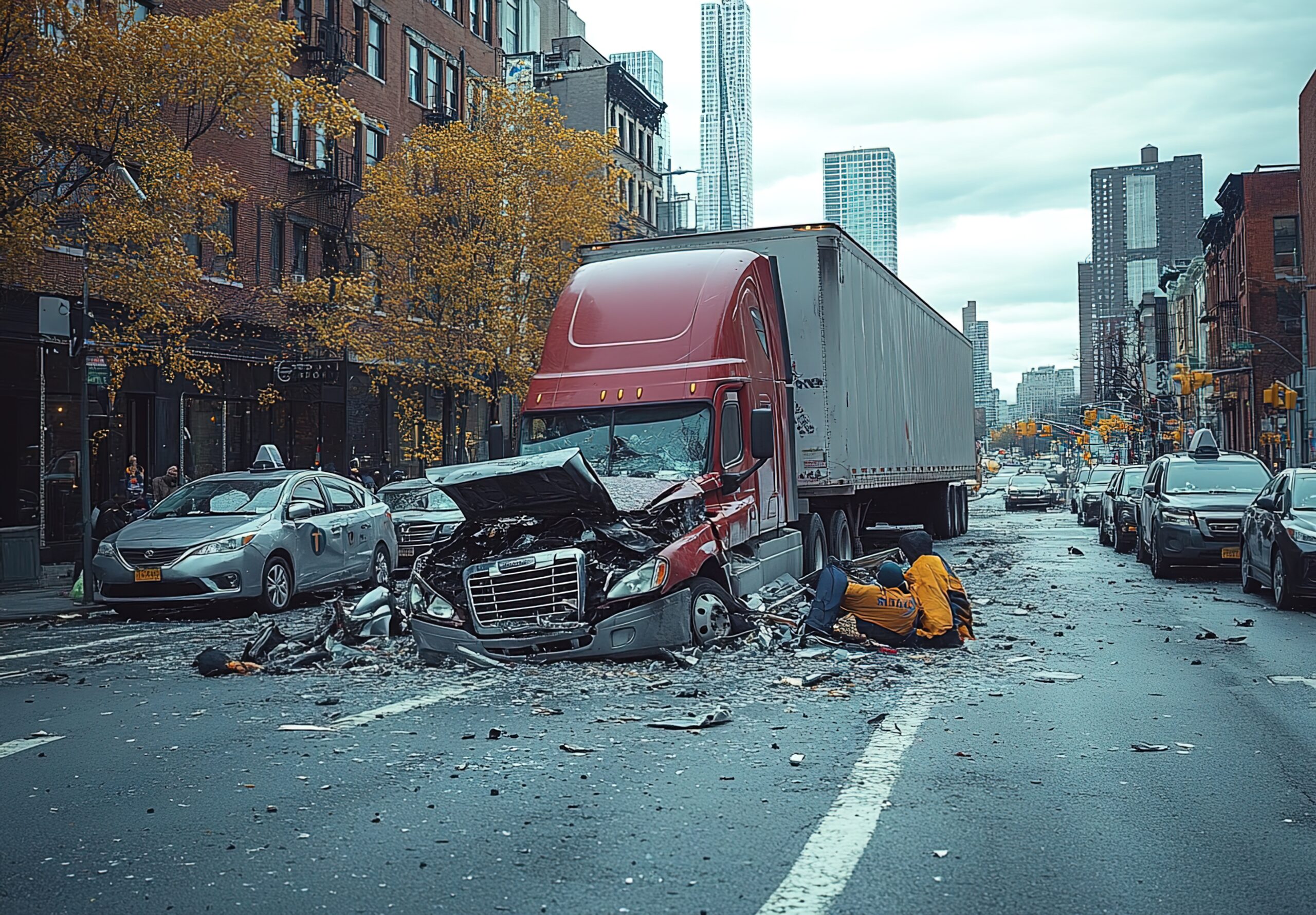
When a loaded commercial truck collides with a passenger vehicle, the people in the smaller vehicle usually absorb the force. The National Highway Traffic Safety Administration counted 391 deaths in California crashes involving large trucks in 2024, and 353 of those were people who were not in the truck. Behind every serious injury sits a second problem, because a driver, a carrier, a cargo company, and several insurers may all start protecting themselves within hours. Speaking with a California personal injury lawyer early can help make sure the evidence that supports your claim is preserved before it is lost.
A truck crash claim calls for a firm that knows how to move quickly, and you can read about Setareh Law, APLC Personal Injury & Accident Lawyers, which brings 60 years of combined experience, more than 900 five-star reviews, and seven California offices to injured people across the state. We take truck accident cases on a contingency fee basis, so you pay a fee only if we get results. Home and hospital visits are available, and se habla español.
⚠ Time-Sensitive Notice for Truck Crash Victims
Most California truck accident injury lawsuits must be filed within 2 years, claims involving a public entity can have a deadline as short as 6 months, and key trucking records may not be kept for long.
60 years of combined experience, more than 900 five-star reviews, and no fee unless we get results. Home and hospital visits are available.
Why Truck Accident Cases Are More Complex Than Car Accident Cases
Truck accident cases are more complex than car accident cases because more rules apply, more companies may share responsibility, and the key evidence is controlled by the party you may be making a claim against. A typical car claim involves two drivers and their insurers, while a truck claim can reach much further, as the comparison below shows.
| Issue | Typical Car Crash | Commercial Truck Crash |
|---|---|---|
| Who may be responsible | One or two drivers, and sometimes an owner or employer. | The driver, the carrier, a shipper or loader, a maintenance shop, a broker, a parts maker, or a public agency. |
| Rules that apply | State traffic laws. | State traffic laws plus federal safety rules on driver hours, vehicle inspection, and driver qualification files. |
| Key evidence | Photographs, the police report, and witness statements. | The same items, plus electronic logs, engine data, inspection and maintenance records, and cargo paperwork held by the company. |
| Insurance | A personal auto policy. | Commercial liability coverage, which federal rules set at a higher minimum for many carriers. |
| Injuries | Range from minor to severe. | Often severe because of the size and weight of the truck. |
Weight is a large part of the story. Under Vehicle Code section 35550, the weight on any one axle may not exceed 20,000 pounds, and section 35551 sets limits for groups of axles that reach a ceiling of 80,000 pounds. An overloaded or poorly balanced truck can take longer to stop and is harder to control, and this overview of California’s weight limit laws and truck accident liability explains how violations can bear on fault.
Common Types of Truck Crashes in California
Most serious truck crashes follow a handful of patterns, and each pattern points to different evidence and different responsible parties.
Jackknife Crashes
A jackknife happens when the trailer swings out and folds toward the cab, often after hard braking, a slick road, or a poorly balanced load. The trailer can sweep across several lanes and strike vehicles on both sides.
Underride Collisions
In an underride crash, a smaller vehicle slides beneath the trailer, which can cause severe head and upper-body injuries. Missing or damaged rear guards and poor trailer visibility at night can matter in these cases.
Rollover Crashes
Trucks with a high center of gravity can tip on curves, ramps, and sudden evasive turns, particularly when speed is too high for the load. Liquid cargo and uneven loading can make a rollover more likely.
Lost or Shifted Load Crashes
Cargo that is overweight, poorly balanced, or not properly secured can shift or fall onto the road. The company that loaded the cargo, the shipper, and the carrier may each share responsibility.
Blind-Spot and Wide-Turn Crashes
Large trucks have big blind areas beside and behind the trailer, and a wide right turn can swing the trailer into a car that seems to have room. These crashes often involve lane changes, merges, and turns at intersections.
Brake Failure Crashes
A loaded truck needs far more distance to stop, and worn brakes, poor adjustment, or skipped inspections can stretch that distance further. Maintenance records and inspection reports often decide who is responsible.
Rear-end collisions, tire blowouts, and crashes caused by a fatigued or distracted driver also happen. Whatever the pattern, the first questions are the same: who was operating the truck, who controlled its condition and load, and what evidence shows what happened.
Who May Be Responsible for a California Truck Accident
More than one party can be responsible for a truck crash, and finding each of them can increase the insurance available to pay your claim.
- The truck driver, whose fatigue, speed, distraction, or impairment may have caused the crash.
- The trucking company or carrier, which may answer for the driver’s conduct on the job and for how it hired, trained, scheduled, and supervised the driver.
- The shipper or cargo loader, when cargo was overloaded, unbalanced, or not secured.
- A maintenance or repair company, when brakes, tires, steering, or other systems were not properly serviced.
- A freight broker, in some cases, when it chose a carrier that it should have known was unsafe.
- A parts or vehicle manufacturer, when a defective component played a role.
- A city, county, or state agency, when a government-owned truck or a dangerous road condition contributed to the crash.
Employee Drivers Versus Independent Contractors
A carrier is generally responsible for the work-related conduct of its employees, which is the same idea explained in this article on company vehicle liability. Some carriers label drivers as independent contractors to argue that the driver, not the company, is responsible. Whether a driver is truly an employee or a contractor depends on the actual working relationship, such as who controls routes, schedules, and equipment, and not only on the label in a contract. Even when a driver is a true independent contractor, the carrier may still face claims based on its own choices, such as hiring, training, or maintenance.
Federal and California Trucking Rules That Matter in an Injury Claim
Commercial trucks must follow safety rules that ordinary drivers do not, and a violation can help show that a carrier or driver failed to act with reasonable care. Which rules apply can depend on the type of carrier, the cargo, and whether the trip crossed state lines, so this table is an overview and not a complete list.
| Rule | What It Requires | Why It Can Matter |
|---|---|---|
| Hours of service | Under federal hours-of-service rules, most property-carrying drivers must take 10 consecutive hours off duty before driving, may not drive after 14 consecutive hours on duty, may drive no more than 11 hours in that window, and need a 30-minute break after 8 hours of driving. Weekly limits are 60 hours on duty in 7 days or 70 hours in 8 days, and some exceptions exist. | Fatigue can contribute to truck crashes, and duty records can show whether the limits were exceeded. |
| Electronic logging | Most carriers must require drivers to record duty status with an electronic logging device, and drivers and carriers may not tamper with the device or make a false duty-status report. | Logs can be compared with fuel receipts, toll records, and delivery times. |
| Inspection and maintenance | Carriers must systematically inspect, repair, and maintain their vehicles, and drivers must note defects in a daily vehicle inspection report that covers brakes, steering, tires, and other safety parts. Safety defects must be fixed before the truck operates again. | Brake and tire failures can trace back to missed inspections or deferred repairs. |
| Driver qualification | Carriers must keep a driver qualification file with the driver’s application, driving record, road test certificate, and medical examiner’s certificate. | The file shows what the carrier knew about the driver when it put the driver on the road. |
| Minimum insurance | Many for-hire carriers hauling nonhazardous freight across state lines in vehicles rated at 10,001 pounds or more must carry at least $750,000 in public liability coverage under federal financial responsibility rules, and higher minimums apply to certain hazardous materials. | The figure is a minimum, not a measure of what a claim is worth, and some carriers carry more. |
A related rule in California evidence law can help in some cases. Under Evidence Code section 669, a court presumes a person failed to use due care when the person violated a law or regulation, the violation caused the injury, and the injury was the kind the rule was meant to prevent for people the rule was meant to protect. The presumption can be rebutted, for example by showing the person did what a careful person trying to follow the law would have done, so proof of a violation does not decide a case on its own.
Evidence in a Truck Crash That Can Disappear Quickly
The most important evidence in a truck crash is usually in the hands of the trucking company, and some of it may be kept for only a few months or overwritten much sooner.
| Evidence | What It Can Show | How Long It May Be Kept |
|---|---|---|
| Duty-status records and ELD data | Driving time, rest periods, and whether hours limits were exceeded. | Federal rules require carriers to keep records of duty status and supporting documents for at least 6 months. |
| Engine and black-box data | Speed, braking, and throttle in the seconds before impact. | Can be overwritten once the truck is repaired or returned to service. |
| Dashcam and camera video | The road ahead, the driver’s behavior, and the moments around the impact. | May be overwritten automatically unless someone saves it. |
| Inspection reports | Known defects and whether they were repaired. | Daily vehicle inspection reports must be kept for 3 months. |
| Maintenance records | Service history for brakes, tires, and steering. | Federal rules call for 1 year, plus 6 months after the vehicle leaves the carrier’s control. |
| Driver qualification file | Hiring, training, driving history, and medical certification. | Retention periods vary, so a request should go out early. |
| Cargo and loading records | Weight, load balance, and who loaded the truck. | Held by the shipper, loader, and carrier, and may be discarded in the ordinary course of business. |
A preservation request, sometimes called a spoliation letter, is a written notice sent to the carrier, its insurer, and other companies involved, asking them to keep specific evidence such as logs, engine data, camera footage, inspection and maintenance records, the driver’s file, and cargo paperwork. It does not by itself force a company to hand anything over, but it puts the company on notice that a claim is coming, which can matter if evidence is later lost. Sending one within days of the crash gives you a stronger chance of keeping records that would otherwise be discarded on a routine schedule.
Hurt in a Truck Crash? Ask Setareh Law to Act on the Evidence Now
Your consultation is free, and you pay nothing unless we get results. Home and hospital visits are available.
Catastrophic Injuries After a Truck Accident
A collision with a commercial truck can cause life-changing injuries, and many of them need long-term care. Common catastrophic injuries include traumatic brain injuries, spinal cord injuries that can lead to paralysis, amputations, crush injuries, severe burns, and multiple broken bones, along with internal organ damage that may not be obvious at the scene.
Even injuries that seem manageable, such as whiplash, can bring weeks of treatment and missed work after a truck impact. Because the full course of recovery may take months or years to understand, a claim should account for future surgeries, rehabilitation, changes to your home or vehicle, and your ability to return to work. When a crash is fatal, eligible family members may pursue a wrongful death claim.
Statute of Limitations for California Truck Accident Cases
Most California truck accident injury lawsuits must be filed within 2 years of the crash, and missing the deadline usually ends your right to seek compensation. Different deadlines can apply to property damage, public entities, and injured children.
| Type of Claim | Deadline | What to Know |
|---|---|---|
| Personal injury and wrongful death | 2 years | Counted from the date of injury, or from the date of death in a wrongful death claim. |
| Property damage | 3 years | Covers damage to your vehicle and other personal property. |
| Claim against a public entity | 6 months | A written claim must be presented first. This can apply when a city, county, or state vehicle was involved or a dangerous road condition contributed. |
| Injured minors | May be extended | The clock can be paused while the injured person is under 18, but government claims still follow their own rules. |
If a public entity rejects a claim in writing, a lawsuit generally must be filed within 6 months of that notice under Government Code section 945.6. Because trucking records can disappear long before any deadline arrives, waiting until the final months to act can cost you evidence even when your lawsuit would still be timely.
How Comparative Fault Affects a California Truck Accident Claim
You can still recover compensation in California if you were partly at fault for a truck crash, because the state follows a pure comparative fault rule that reduces your damages by your percentage of fault. If a jury finds your damages total a certain amount and decides you were 25 percent responsible, for example, your award is reduced by one quarter.
Carriers and their insurers know this rule and often argue that the car driver changed lanes suddenly, braked without warning, or lingered in a blind spot. Under Civil Code section 1431.2, each defendant is responsible for non-economic damages only in proportion to its own share of fault, so a clear picture of what every party did matters.
What to Do After a Crash With a Commercial Truck
Your first priority is safety and medical care, and the steps below can protect both your health and your claim.
1. Call 911 and Get Checked
Call 911 if anyone is hurt, and accept a medical evaluation even if you feel fine. Adrenaline can mask head, neck, and internal injuries.
2. Stay Safe and Stay Put
Move to safety if you can, and wait for the California Highway Patrol or local police. Ask the officer for a report number before you leave.
3. Photograph the Truck and Scene
Photograph the truck, trailer, company markings, license plates, skid marks, debris, and road conditions, and note any cameras on the truck or nearby buildings.
4. Collect Names and Witnesses
Get the driver’s name, the carrier’s name from the cab or trailer, insurance details, and contact information for any witnesses.
5. Report the Crash
File the DMV SR-1 form within 10 days when anyone was injured or killed or property damage is more than $1,000, and tell your own insurer promptly.
6. Speak With a Lawyer First
Do not give a recorded statement or sign anything for the trucking company or its insurer before you have legal advice, and avoid posting about the crash online. A lawyer can send preservation requests right away.
How the Value of a Truck Accident Claim Is Determined
There is no standard value for a truck accident claim, because the amount depends on the injuries, the cost of care, the effect on your work and daily life, and the insurance and responsible parties involved. These are the main factors a lawyer weighs.
Severity and Permanence of Injuries
Long-term disability, scarring, and loss of function generally weigh more heavily than injuries that heal fully.
Medical Costs, Past and Future
Emergency care, surgery, therapy, medication, and projected future treatment all form part of the claim.
Lost Income and Earning Capacity
Missed wages count, and so does a reduced ability to earn if you cannot return to the same work.
Pain, Suffering, and Daily Life
Non-economic damages reflect physical pain, emotional distress, and the loss of activities you enjoyed.
Fault and Shared Fault
Your percentage of fault, if any, reduces the final amount, which is why proof of what the driver and carrier did matters.
Insurance and Responsible Parties
Commercial coverage and separate policies held by a shipper, loader, or broker can affect what is available to pay a claim.
In limited cases involving malice, oppression, or fraud, California law may allow punitive damages under Civil Code section 3294, which requires clear and convincing evidence. Whether that standard is met depends entirely on the facts. Every case is different, and results depend on the injuries, the evidence, and the insurance available.
How Commercial Carriers and Insurers Handle Truck Accident Claims
Carriers and their insurers protect their own interests from the first hours after a serious crash, and knowing their usual moves can help you avoid mistakes that are hard to undo.
Fast Response Teams
A carrier or its insurer may send investigators to the scene or contact you within days to gather statements and photographs that favor the company.
Recorded Statements
Casual answers about how you feel or what happened can be used later to dispute your injuries or shift blame to you.
Blame Shifting
Expect arguments that you braked suddenly, changed lanes without enough room, or were riding in the truck’s blind spot.
Independent Contractor Arguments
A company may say the driver was not its employee, or that another company controlled the load, to push responsibility away from itself.
Disputing Medical Care
The insurer may argue that treatment was unnecessary, too costly, or caused by an earlier condition.
Early Low Offers
A quick offer may arrive before the full extent of your injuries is known, and accepting it usually ends the claim.
Having a lawyer handle these contacts lets you focus on recovery while someone else tracks the evidence, the deadlines, and the paperwork.
How Setareh Law Handles a Truck Accident Case
Setareh Law begins a truck accident case by identifying who controlled the truck, the load, and its maintenance, and by sending preservation requests to every company that may hold important records. We then gather medical proof, bring in accident reconstruction and medical professionals when a case calls for them, and build the claim against every responsible party and every available policy.
Each case starts with a free consultation, and because we work on a contingency fee basis you pay a fee only if we get results. Clients who cannot travel can ask about home and hospital visits, and our team speaks Spanish. We explain the options at each stage so you can make decisions with clear information.
Setareh Law Offices Across California
Setareh Law serves injured people through offices in several California cities, and you can meet with a truck accident lawyer at the location that is easiest to reach.
| Office | Address |
|---|---|
| Beverly Hills | 8484 Wilshire Blvd #870, Beverly Hills, CA 90211 |
| Fresno | 4005 North Blackstone Avenue #101A, Fresno, CA 93726 |
| Modesto | 931 10th Street #454, Modesto, CA 95354 |
| San Diego | 1855 First Ave. #103, San Diego, CA 92101 |
| Santa Rosa | 427 Mendocino Ave, Suite 100, Santa Rosa, CA 95401 |
| Stockton | 110 N San Joaquin St FL 2, #22, Stockton, CA 95202 |
| Tracy | 1005 E Pescadero Ave Ste 167, Tracy, CA 95304 |
To reach any office, call (310) 659-1826 and we will help you find the closest location or arrange a home or hospital visit.
Frequently Asked Questions About California Truck Accident Cases
Speak With a California Truck Accident Lawyer Today
If you or a family member were hurt in a crash with a commercial truck anywhere in California, you do not have to face the carrier and its insurers alone. Setareh Law brings 60 years of combined experience, more than 900 five-star reviews, and a contingency fee approach to every claim, so you can focus on your recovery while we focus on the evidence.
Call (310) 659-1826 or send your details through our free case review form, and we will explain your options and the next steps.